By Dave Workman
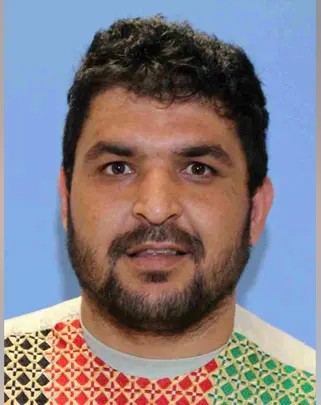
Repeated inquiries to the Department of Justice and U.S. Attorney’s Office in Washington, D.C. regarding details on the handgun allegedly used by murder suspect Rahmanullah Lakanwal in the attack on two National Guard troopers remain unanswered, and the question now is “Why?”
There are no specifics on the gun in charging documents shown at the Courthouse News.
Early reports said the gun was a .357 (Magnum) Smith & Wesson revolver, and grainy images of the suspected shooter make it appear the handgun was a compact model. U.S. Attorney for D.C. Jeanine Pirro said the revolver was a “six-shooter” during one press briefing, but since then, prosecutors and the media have remained silent about the specific model.
There are lots of S&W revolvers chambered for the .357 Magnum cartridge, ranging from smaller five-shot J-frame models to the much larger K, L and N frame guns, some of which are capable of holding seven cartridges. One early unsubstantiated report suggested the gun had been traced to someone in Washington state, but that person was deceased.
The suspect is not a U.S. citizen, and it is unknown—or at least unreported—whether he had an alien firearms license.
The .357 Magnum was first introduced in 1935 by Smith & Wesson. Among the earliest fans of the cartridge, and the handgun chambered for it, was then-Lt. Col. George S. Patton. The sidearm went with him to North Africa and then to Europe as one of the two ivory-handled sidearms he carried, He reportedly once referred to the .357 as his “killing gun” if he ever got into a scrape. Patton’s other revolver was a .45 Colt single action, which more often is seen on his side.
At close range, the .357 Magnum is a devastating round, capable of stopping big game animals including elk, deer and bears, and it has earned a reputation for being carried by American law enforcement before municipal and state police and sheriff’s deputies largely switched over to semi-auto pistols in the late 1980s and early 1990s.
In Washington state, where the suspect reportedly lived after coming to the U.S. from Afghanistan following the U.S. withdrawal, all transfers of handguns have required a background check, whether done as a commercial sale or a private transaction. Since the investigation is continuing, investigators may be tight-lipped because they are still trying to establish how the suspect came into possession of the revolver, now a key piece of evidence.
According to the Courthouse News, Lakanwal “reportedly drove from Washington state to D.C. for a “targeted” strike.” He entered a “not guilty” plea during a virtual court appearance, while he remains confined to a hospital bed, recovering from wounds he suffered during the attack. He was wounded by a National Guard trooper, apparently while trying to reload.
Specialist Sarah Beckstrom and Staff Sergeant Andrew Wolfe were both shot in the head. Beckstrom died on Thanksgiving Day while Wolfe remains in critical condition at last report. No motive has officially been determined, although it has been called a “terrorist attack” by many, and according to the charging document, the suspect was heard to hell “Allahu Akbar!” as he opened fire.
Workman is editor-in-chief at TheGunMag.com