By Dave Workman
The Third U.S. Circuit Court of Appeals on Friday ruled that New Jersey’s ban on so-called “assault weapons” and “large-capacity magazines” is unconstitutional under the Second Amendment.
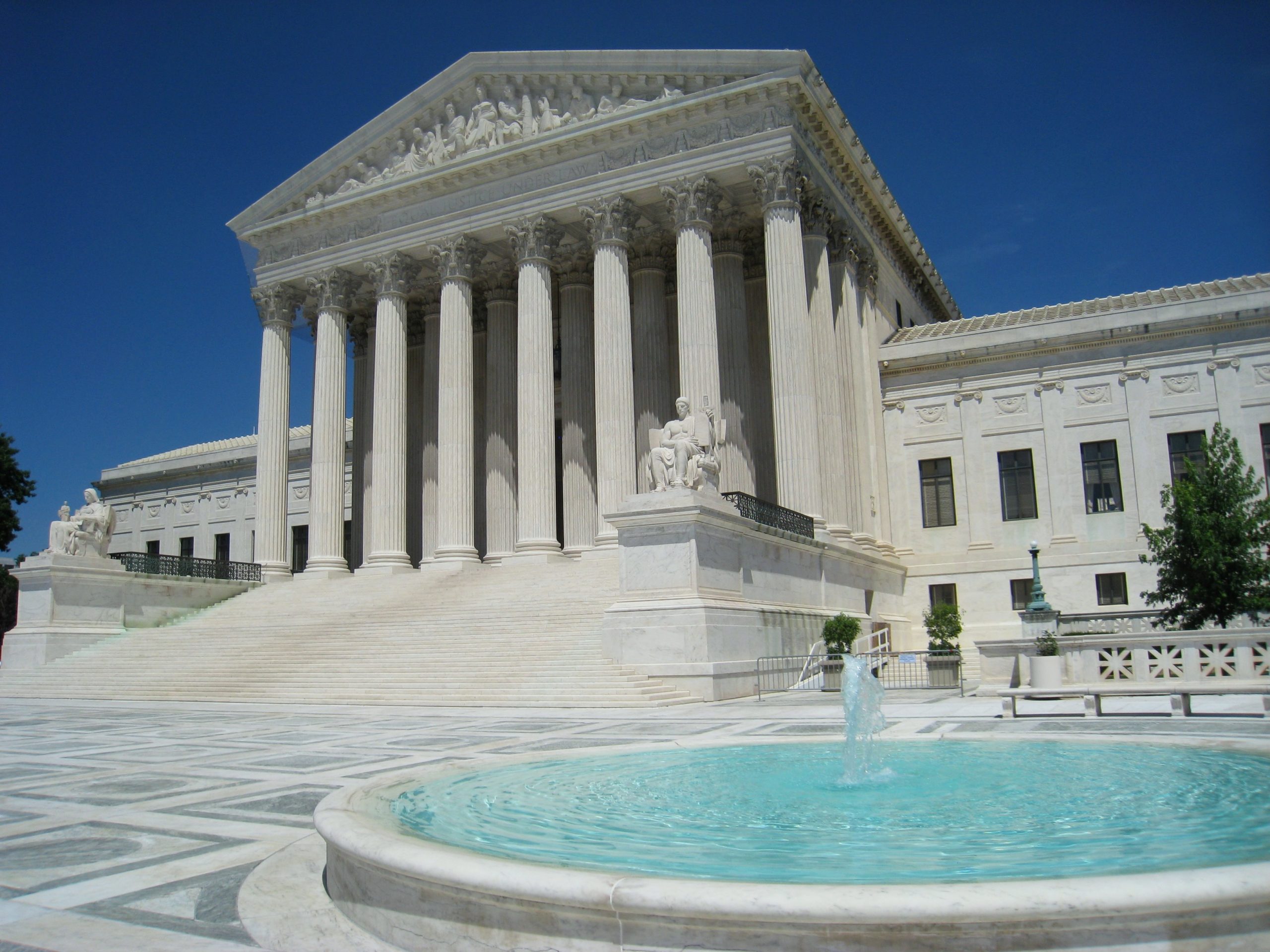
Reuters is reporting that this is the first time a federal appeals court had ruled against the Garden State’s semi-auto rifle ban. It comes less than a month after the U.S. Supreme Court granted certiorari to a pair of “assault weapon” ban cases, with oral arguments sometime during the upcoming session, beginning in October.
Writing for the Court, Circuit Judge Arianna Julia Freeman, a 2022 Joe Biden appointee, stated, “Applying the framework announced in New York State Rifle & Pistol Association v. Bruen, we agree with the District Court that New Jersey’s ban on Colt AR-15s violates the Second Amendment. However, because the record supports the same result for all semi-automatic rifles—not only Colt AR-15s—we will MODIFY the District Court’s order so that it deems the Assault Firearm Provisions unconstitutional with respect to the full class of semi-automatic rifles. We will AFFIRM that part of the order as modified.
“The LCM Provisions also violate the Second Amendment, so we will REVERSE the District Court’s order with respect to those,” Judge Freeman added. “Because the LCM Provisions violate the Second Amendment, we need not address the Takings Clause challenge.”
Three different challenges had been launched by gun rights organizations, including two by the Association of New Jersey Rifle and Pistol Clubs with different private citizens, and one by the Firearms Policy Coalition, and two private citizens. The cases were consolidated.
In wrapping up the court’s majority opinion—there were dissents—Judge Freeman hammered down on New Jersey’s arguments with language which should send an ominous signal to other states with rifle and magazine bans, and may also hint at the outcome of the Supreme Court’s upcoming review of bans in Connecticut and Cook County, Ill.
“Finally,” she wrote, “even if we agreed that semi-automatic rifles implicate ‘unprecedented societal concerns or dramatic technological changes,’ that would not change the outcome here. That is because the ‘more nuanced approach’ does not permit us to abandon the analogical inquiry prescribed by Bruen. Fundamentally, we must determine whether ‘modern and historical regulations impose a comparable burden on the right of armed self-defense and whether that burden is comparably justified.’ Even if we loosen the strictures of the analogical inquiry by more broadly construing the ‘how’ and ‘why’ of the analogues New Jersey proffers, regulations that restrict the carrying of certain types of arms do not impose a burden comparable to that of a de facto ban on the possession of an entire class of arms.
“We therefore hold that New Jersey’s complete prohibition on the possession of semi-automatic rifles runs afoul of the Second Amendment’s protections,” the judge stated.
But the ruling goes further, and gun prohibitionists will be taking note of this.
“Because magazines are required to operate many firearms,” Judge Freeman explains, “they are ‘Arms’ within the text of the Second Amendment—even when they can hold more than ten rounds of ammunition. Thus, magazines—including those that can hold more than 10 rounds of ammunition—are presumptively entitled to constitutional protection.
“As with the Assault Firearm Provisions,” she continues, “we need not employ a ‘nuanced approach’ to analogical reasoning about New Jersey’s LCM Provisions. Bans on weapons in common use for lawful purposes are unlawful. So are severe restrictions on weapons in common use for lawful purposes. However much nuance we might employ, we could not overcome the dearth of relevantly similar Founding-era restrictions.
“For all these reasons, New Jersey’s LCM Provisions violate the Second Amendment,” she concluded.
Newsweek is reporting the state is likely to “seek further review of Friday’s decision, either through the full 3rd Circuit or directly at the Supreme Court.”
However, Newsweek also noted, “Regardless of the next procedural steps, the issue is already headed to the nation’s highest court, where the justices are expected to issue a ruling that could determine whether assault weapons bans across multiple states can remain in force or must be struck down nationwide.”