By Dave Workman
As the 41st annual Gun Rights Policy Conference begins unfolding in Dallas, Texas this weekend, there is suddenly growing media attention to the upcoming Dec. 2 oral arguments before the U.S. Supreme Court in the consolidated cases from Illinois and Connecticut which challenge the constitutionality of bans on so-called “assault weapons.”
This weekend’s Gun Rights Conference is being live streamed, so grassroots activists unable to attend in person at the Westin Dallas-Fort Worth Airport Hotel can watch it here:
Saturday: https://www.youtube.com/watch?v=G0ty5J3XQDc
Sunday: https://www.youtube.com/watch?v=iEb5krJ19tQ
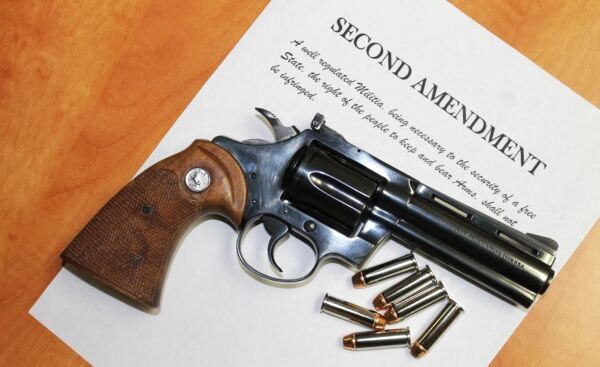
In a report published Wednesday by the Daily Signal, the publication notes, “Gun control advocates have argued that the Second Amendment does not protect an individual’s right to bear arms, but rather the collective right to a regulated militia, noted Matthew Cavedon, director of the Project on Criminal Justice at the Cato Institute.”
Clearly, this reveals a stubborn ignorance on the part of gun prohibitionists. Right up front in the June 2008 Supreme Court’s Heller ruling, the Syllabus states, “The Second Amendment protects an individual right to possess a firearm unconnected with service in a militia, and to use that arm for traditionally lawful purposes, such as self-defense within the home.” This should take the collective right argument off the table, but anti-gunners persist in their belief the high court was wrong.
The Center Square is reporting that legal analysts expect the high court’s ruling in the two combined cases—known as Viramontes v. Cook County (Illinois) and Grant v. Higgins (Connecticut)—”will have vast implications for Second Amendment protections across the U.S.” That is a certainty, and many in the gun rights community expect an affirmative ruling, protecting the ownership of modern semiautomatic rifles and pistols. This will essentially nullify the bans in question, and similar laws that exist in other states including Massachusetts, New York, New Jersey, California and Washington.
The Center Square article quotes Prof. Bob Cottrol, who has appeared at previous Gun Rights Conferences. His assessment was matter-of-fact: “Nothing in the history or tradition of firearms litigation or legislation says that military features should necessarily be taken.”
He is predicting the gun bans will be overturned. He also said more litigation will be necessary to determine whether states can ban possession of so-called “large-capacity magazines” which hold more than ten cartridges.
Nobody expects an immediate decision on this important Second Amendment case. In all likelihood, it will be withheld until the final day of the court session, in late June. Traditionally, the high court holds its most controversial rulings until the last day or two of the session.