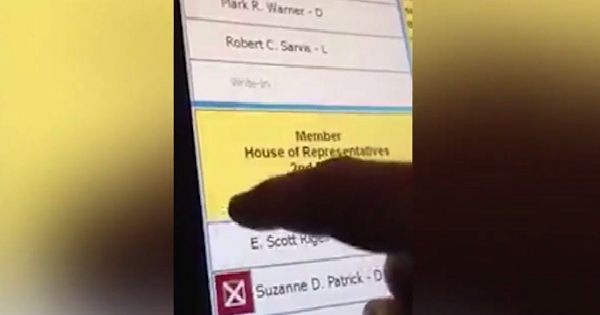
A new Rasmussen survey released this week shows that 63 percent of likely voters are concerned that electronic voting systems “may allow votes to be changed remotely through Internet connections during voting – a finding identical to our December survey.”
The number includes 33 percent who are “very concerned,” while another 33 percent are not so worried, including 12 percent are not concerned at all.
According to Rasmussen, 39 percent of respondents think electronic voting machines make it easier to cheat in an election. This is up three points from the 36 percent who believed that in December.
The survey of 1,139 U.S. Likely Voters was conducted on Feb. 18-19 and 22 by Rasmussen Reports. The margin of sampling error is +/- 3 percentage points with a 95% level of confidence.
Rasmussen also learned that 21 percent believe electronic voting machines make it harder to cheat, while 31 percent think electronic voting machines really don’t make much difference.
Forty-seven percent (47%) of Republicans, 31% of Democrats and 38% of unaffiliated voters believe electronic voting machines make it easier to cheat in elections, Rasmussen reported.
Meanwhile, 73% of Republicans, 59% of Democrats and 56% of unaffiliated voters are at least somewhat concerned that electronic voting systems may allow votes to be changed remotely through Internet connections during voting, the veteran polling firm revealed.
“Among those who think electronic voting machines make it easier to cheat in elections, 83% are at least somewhat concerned that electronic voting systems may allow votes to be changed remotely through Internet connections during voting,” Rasmussen said.