By Dave Workman
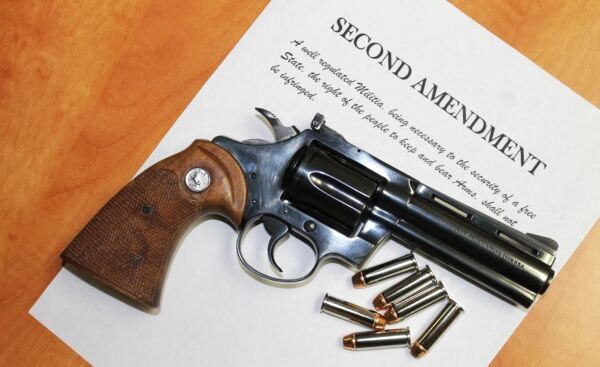
The U.S. Supreme Court on Thursday ruled unanimously that the government’s prosecution of a man convicted of casual marijuana use while owning a firearm “is inconsistent with the Second Amendment.”
The case is known as United States v. Hemani.
The ruling amounts to a tectonic shift in how the government deals with casual marijuana users who also possess firearms. Under federal law this has remained illegal even while several states have adopted laws allowing recreational marijuana use, along with recognizing the medical use of marijuana as prescribed by physicians.
And, as noted by Fox News, this is the same law that was used to prosecute Hunter Biden.
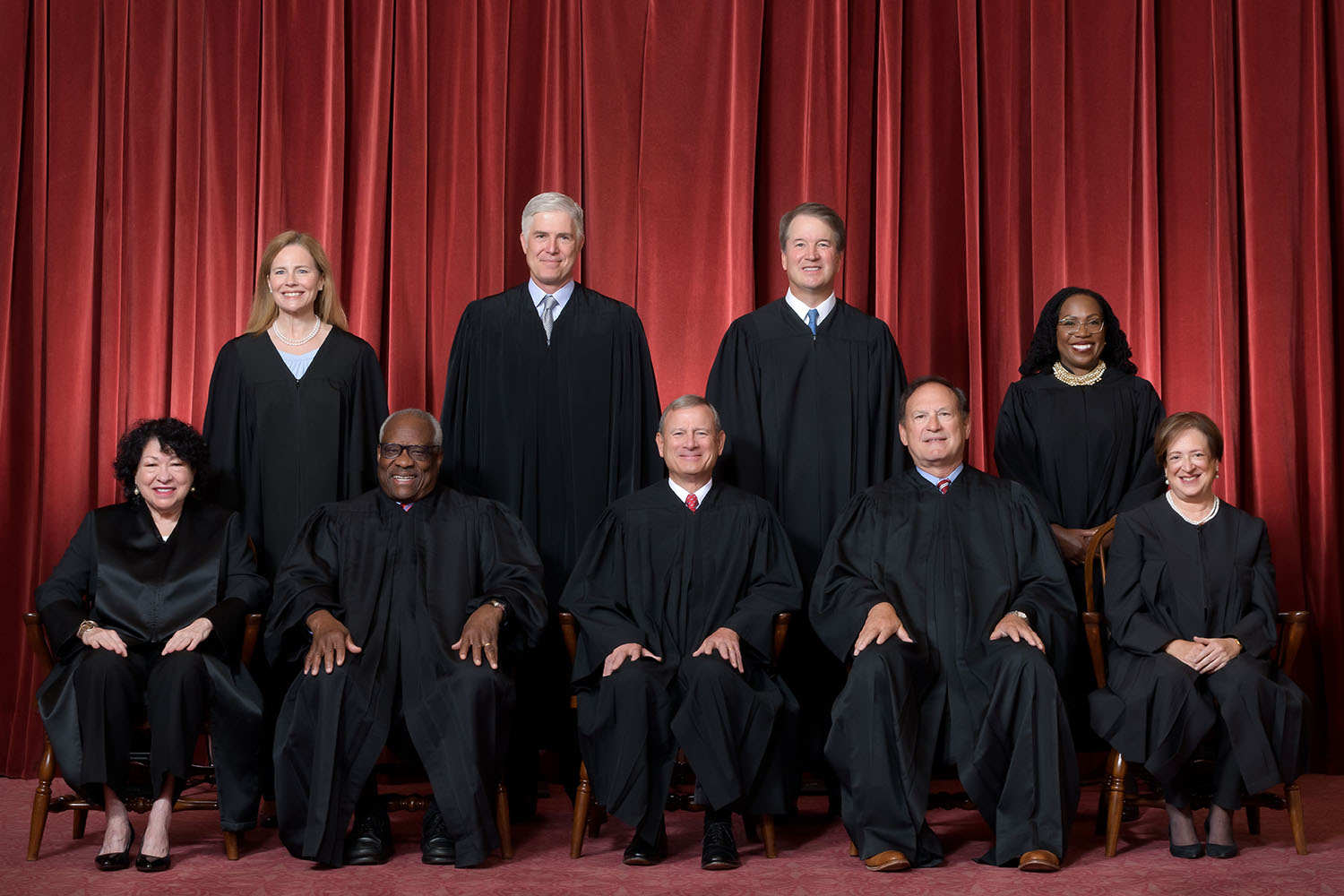
In addition to the court opinion, authored by Justice Neil Gorsuch, there are three concurring opinions, one from Justice Clarence Thomas, another from Justice Ketanji Brown Jackson, which was joined by Justice Sonia Sotomayor and a third by Justice Samuel Alito, joined by Justice Elena Kagan. The opinion of the court was joined by Justices Thomas, Sotomayor, Jackson, Brett Kavanaugh and Amy Coney Barrett.
Writing for the Court, Justice Gorsuch sums up the problem with the government’s prosecution of Ali Hemani, a dual citizen of the U.S. and Pakistan, who was born in Texas.
“(W)e do not question that sometimes an individual’s unlawful use of marijuana (or any other controlled substance) may render him a danger to others,” Gorsuch writes. “But, again, the government disclaims the need to show anything like that in this case. Instead, it asks us to conclude that anyone who regularly uses marijuana is categorically violent and dangerous without any further showing. All based on little more than its current say-so, one at odds with its own regulatory actions. And affording the government that kind of “broad power to designate any group as dangerous and thereby disqualify its members from having a gun” would risk allowing it to ‘quickly swallow’ the Second Amendment.”
The high court’s opinion closes with three significant paragraphs which essentially close the door to prosecuting anyone who is merely a casual pot smoker but poses no threat to public safety.
“In many respects,” Gorsuch observes, “this case is a narrow one. We do not address efforts to ban addicts…or those presently intoxicated, from possessing a firearm. We do not address other prophylactic laws Congress might adopt after determining that users of a particular drug pose a special risk of misusing firearms. We do not address 18 U. S. C. §922(g)(1)’s provision disarming individuals convicted of felonies (often including drug-related ones). We do not even address whether the government could bring a prosecution under §922(g)(3) accompanied by individualized proof that the defendant’s use of marijuana (or any other drug) renders him a danger to himself or others. Or proof that a certain drug always renders its users dangerous because of its potency or for some other reason. None of those issues is before us and we do not pass on them either way.
“All that is before us,” the ruling continues, “is one, if surely ambitious, theory. The government maintains that it may automatically strip Mr. Hemani of his Second Amendment right to possess a firearm because he uses marijuana a few times a week. More than that, because he possessed a gun despite this prohibition, the government insists it may imprison him for up to 15 years and disarm him for life. According to the government, none of this turns on how much marijuana Mr. Hemani uses or what effect it has on him. It makes no difference either if he keeps a firearm only in his home for self-defense, never misuses a gun while intoxicated, and never poses a danger to himself or others as a result of his marijuana use. The only thing the government must show, it says, is that an individual like Mr. Hemani regularly uses any amount of any controlled substance.
“To square that expansive theory with the Second Amendment,” the Court states, “the government invites us to draw an analogy between its present regulation and historical laws addressing habitual drunkards. Those laws, the government contends, demonstrate a tradition of firearm regulation consistent with its effort to disarm any regular user of any controlled substance without any further showing. But the government’s analogy fails under every measure it asks us to consider: The historical laws on which it relies targeted different kinds of people, did so for different reasons, and operated in different ways. And faced with all these short comings in the government’s submission, we cannot say it has carried its conceded burden of showing its prosecution of Mr. Hemani complies with the Second Amendment.”
Justice Thomas’ concurring opinion takes things one step further, arguing that the Court, and lower courts, “should revisit the constitutionality of §922(g),” the entire section under which Hemani was prosecuted.