Interrupt At Your Own Risk
Violence interrupter programs began in the mid-1990s in Chicago, though these programs really took off and expanded in the last few years as anti-police, antigun activists sought “police reform” while at the same time blocking good citizens from their right to own and carry firearms to protect themselves, their families and their property. Interrupters were supposed to be in and among trouble-spot neighborhoods and be able to talk through criminal incidents with perpetrators to deter violence instead of calling police officers to the scene. A new study by Johns Hopkins professor Daniel Webster and University of Maryland professor Joseph Richardson shows these programs made things worse. “Using a spatial disaggregation approach, we first divided the [Washington, D.C.] into approximately 1500 equally sized hexagons and assigned their CVI (Community Violence Interruption program) status, then identified synthetic and matched control hexagons that had not yet or never received CVI treatment. Compared to synthetic control areas, we found that VII areas had significantly higher rates of firearm homicides (emphasis added), while CTS areas had somewhat but not significantly elevated rates of firearm homicides (emphasis again added),” the study revealed. VII stands for Violence Interruption Initiative, one of two D.C.-based programs, and CTS stands for the second, Cure The Streets. In fact, part of the study actually found in one area of the city “there was roughly one additional firearm homicide a year per neighborhood where the program operated.” For those following along, antigun defund the police activists advocate for stricter gun control laws that only penalize law-abiding citizens, push to cut law enforcement budgets, support prosecutors who pledge to go easy on criminals and then support police replacement “violence interruption” programs that put community members at a greater risk of violence.Not Simply Numbers
The data speaks for itself but these aren’t just numbers in a spreadsheet. These are real innocent lives taken by those who have no regard for the innocent. And community members aren’t the only victims. The so-called “violence interrupters” themselves are often at great risk when trying to stop a crime. Dante Barksdale served as the outreach coordinator for Baltimore’s Safe Streets violence interrupter program. In Jan. 2021, he was shot and killed in a courtyard at the Douglass Homes housing project. Kenyell Wilson also worked in Baltimore as a Safe Streets violence interrupter in the Cherry Hill neighborhood for nearly nine years. He was fatally shot in July 2021. A quick reminder that defund the police activists pushed the Baltimore City Council to enact a $22 million Baltimore Police Department budget cut in June 2022. Clarence Venable was a trainee with Washington, D.C.’s Cure the Streets violence interruption program. He was shot and killed in Nov. 2019, shortly after finishing a training session at the program’s office. In 2020, the Washington, D.C. Council’s Committee on the Judiciary and Public Safety unanimously approved and the full council passed a budget that reduced the Metropolitan Police Department budget by more than $15 million. Elections have consequences, as the saying goes.The One Best Option
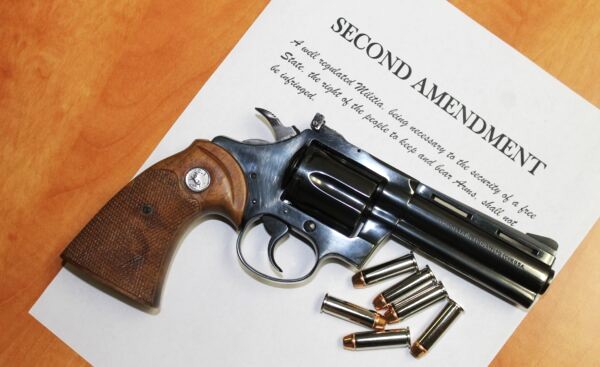
Criminal violence is a plague in all cities across the country. So-called “social justice” activists continue to try and hamstring law enforcement officials and law-abiding citizens in their efforts to just be safe. But criminals aren’t interested in safety and they aren’t interested in justice. While these same activists push defund or reallocate policies on police departments, back soft-on-crime prosecutors and push for more taxpayer dollars for “violence interrupter” programs, law-abiding citizens have made their position clearly known — they will exercise their Second Amendment rights. Nov. 3 is Election Day and all law-abiding citizens need to recognize the stakes and the consequences facing them ahead. Citizens need to remember: Don’t Risk Your Rights® — #GUNVOTE®. Keane is senior vice president and general counsel at the National Shooting Sports Foundation.
Facebook Comments